


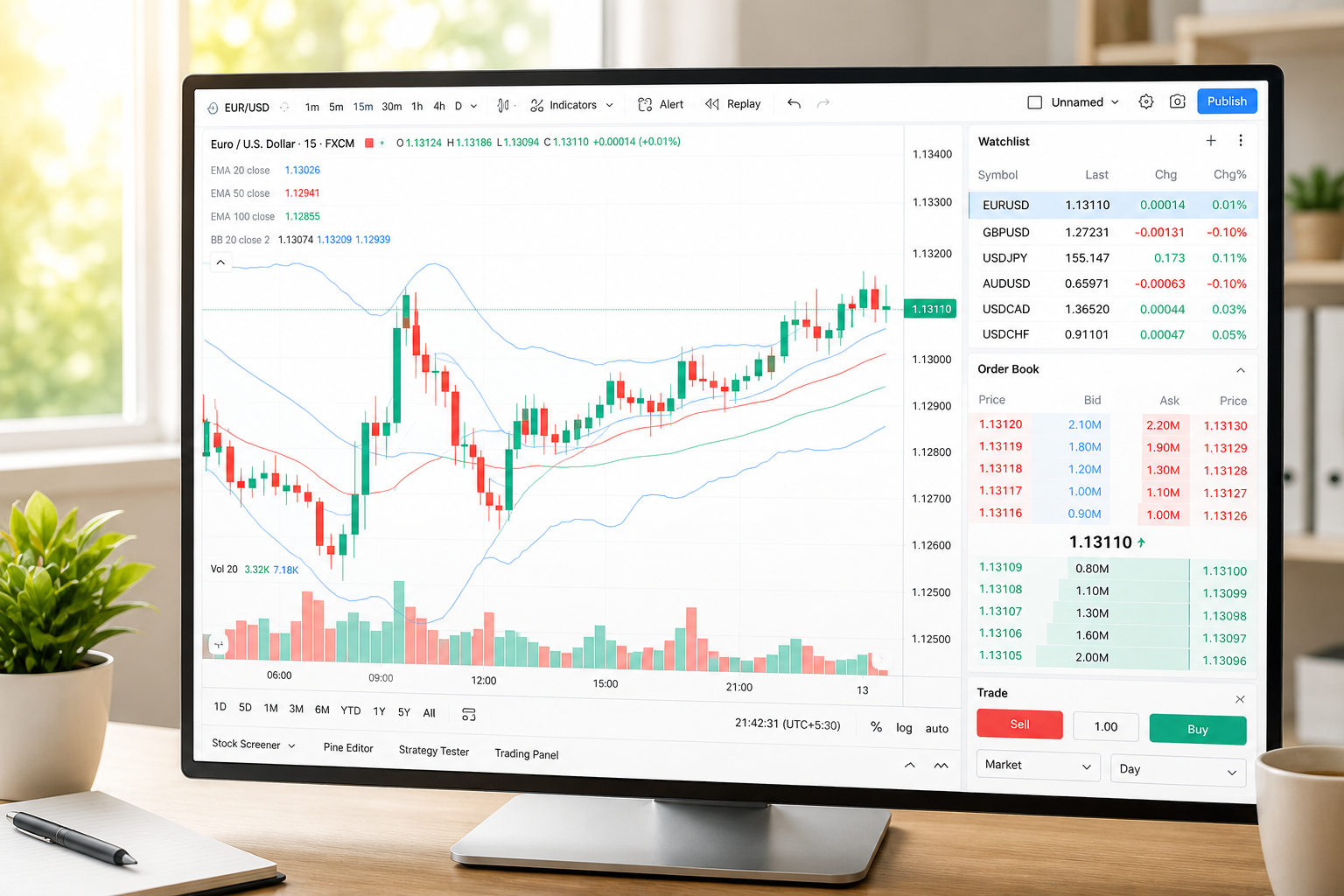
Best Forex Currency Pairs for Beginners: A Practical Guide
Choosing the Right Forex Pair Is More Important Than You Think
Many beginners believe that success in forex trading depends only on finding the right strategy. While strategy is important, choosing the right currency pair is just as critical. Every forex pair behaves differently in terms of volatility, spreads, liquidity, and price movement. Learning on the wrong pair can make trading far more difficult than it needs to be.
A beginner-friendly forex pair offers stable price action, low trading costs, and enough daily movement to create opportunities without exposing traders to unnecessary risk. Understanding these characteristics will help you build confidence and develop better trading habits from the very beginning.
What Makes a Forex Pair Suitable for Beginners?
Not all currency pairs provide the same trading experience. Some are highly liquid and predictable, while others are extremely volatile and expensive to trade. For beginners, choosing the right pair can make the learning process much smoother.
Three key factors determine whether a forex pair is beginner-friendly:
- Low and stable spreads
- High market liquidity
- Consistent daily price movement
Let’s look at each factor in more detail.
Low Spreads Keep Trading Costs Under Control
One of the biggest mistakes beginners make is placing too many trades. Every trade comes with a spread, which is the hidden cost paid when entering and exiting the market.
On highly liquid pairs such as EUR/USD, spreads usually remain between 0.0 and 0.3 pips during active trading sessions. These low costs allow beginners to make mistakes without losing a significant portion of their profits to trading expenses.
Exotic currency pairs are completely different. Their spreads often range from 2 to 5 pips or even higher, meaning traders begin every trade at a disadvantage before the market even moves.
For small trading accounts, choosing low-spread currency pairs is one of the easiest ways to reduce unnecessary costs.
Liquidity Improves Trade Execution
Liquidity refers to how easily buy and sell orders can be completed without causing large price movements.
Major currency pairs such as:
- EUR/USD
- USD/JPY
- GBP/USD
are traded by banks, financial institutions, hedge funds, and millions of retail traders every day.
Because of this enormous trading volume, orders are usually executed very close to the requested price, even during busy market sessions.
Less liquid currency pairs often experience slippage, especially during major economic announcements. Instead of entering at your desired price, your order may be filled several pips away, increasing both risk and trading costs.
Consistent Daily Movement Makes Learning Easier
The best forex pairs for beginners generally move between 50 and 120 pips per day.
These steady movements allow traders to:
- Practice chart analysis
- Learn support and resistance
- Test entry and exit strategies
- Improve risk management
Highly volatile exotic pairs may remain quiet for hours before suddenly moving hundreds of pips within minutes. Such unpredictable behavior encourages emotional trading instead of disciplined decision-making.
Beginners learn faster when markets behave consistently rather than unpredictably.
Understanding the Difference Between Major, Cross, and Exotic Pairs
Forex currency pairs fall into three main categories.
Major Currency Pairs
Major pairs include:
- EUR/USD
- GBP/USD
- USD/JPY
- AUD/USD
- USD/CAD
- USD/CHF
These pairs offer:
- Excellent liquidity
- Low spreads
- Reliable price movement
For most beginners, major pairs provide the safest environment for learning.
Cross Currency Pairs
Cross pairs do not include the US dollar.
Examples include:
- EUR/GBP
- GBP/JPY
- EUR/JPY
Although many cross pairs offer decent trading opportunities, they usually have wider spreads and slightly less predictable price action than major pairs.
Exotic Currency Pairs
Exotic pairs combine one major currency with the currency of an emerging economy.
Examples include:
- USD/TRY
- USD/ZAR
- USD/MXN
These pairs often experience:
- High spreads
- Low liquidity
- Sudden price spikes
- Increased trading costs
For new traders, they are generally best avoided until sufficient experience has been gained.
EUR/USD: The Best Forex Pair for Beginners
When it comes to learning forex trading, EUR/USD remains the number one choice.
It is the most actively traded currency pair in the world, representing roughly one-quarter of global forex trading volume. That enormous liquidity creates several important advantages for beginner traders.
Why EUR/USD Is Ideal for New Traders
The first benefit is extremely low trading costs.
During active London and New York sessions, spreads frequently remain between 0.0 and 0.3 pips, making EUR/USD one of the cheapest currency pairs to trade.
High liquidity also means that orders are executed quickly, reducing the risk of slippage during normal market conditions.
Because both Europe and the United States have overlapping trading sessions, the market remains active for several hours every day, giving beginners plenty of quality trading opportunities.
What Beginners Learn by Trading EUR/USD
EUR/USD helps traders understand the two biggest forces that influence the forex market:
- US Dollar strength
- European Central Bank policy
Changes in Federal Reserve interest rates often strengthen or weaken the US dollar, while European Central Bank decisions affect the euro.
Because these economic drivers are well understood, EUR/USD often respects technical analysis better than many other currency pairs.
Support and resistance levels, trendlines, and psychological price levels frequently produce clean reactions that are easier for beginners to recognize.
Balanced Volatility Makes Risk Easier to Manage
EUR/USD typically moves between 70 and 120 pips per day.
This provides enough volatility to create trading opportunities without exposing beginners to extreme market swings.
Unlike highly volatile pairs, a single losing trade is less likely to cause significant damage to a small trading account.
Common Mistakes Beginners Make on EUR/USD
Although EUR/USD is beginner-friendly, traders still need to avoid several common mistakes.
One of the biggest errors is trading immediately after the London session begins. During this period, short-term volatility increases and false breakouts become more common.
Another mistake is ignoring major US economic news such as:
- Non-Farm Payrolls (NFP)
- Consumer Price Index (CPI)
- Retail Sales
These reports can cause EUR/USD to move 20 to 40 pips within seconds, triggering stop-losses before the market chooses a clear direction.
A Huge Educational Advantage
Another reason EUR/USD is perfect for beginners is the amount of educational material available.
Most trading books, online courses, YouTube tutorials, trading communities, and demo account examples are built around EUR/USD.
This makes it much easier to compare your own analysis with experienced traders and improve your skills more quickly.
USD/JPY: A Great Choice for Learning Technical Analysis
After EUR/USD, USD/JPY is often considered the second-best currency pair for beginners.
It combines excellent liquidity with highly respected technical price action, making it ideal for traders who enjoy chart analysis.
Low Trading Costs and Strong Liquidity
USD/JPY is one of the most actively traded currency pairs in the forex market.
During busy trading sessions, spreads often remain below 0.5 pips, keeping transaction costs low.
Its deep liquidity also ensures smooth order execution, allowing beginners to focus on learning rather than worrying about slippage.
Reliable Technical Price Action
One of USD/JPY’s greatest strengths is its respect for technical analysis.
Trendlines often remain valid for extended periods.
Major support and resistance levels regularly produce strong reactions.
Popular moving averages, such as the 50-period and 200-period Moving Average, frequently act as dynamic support or resistance.
This predictable behavior allows beginners to develop confidence in technical trading strategies.
Suitable for Different Trading Styles
USD/JPY usually moves around 100 pips per day, making it suitable for multiple trading styles.
Scalpers can target small intraday moves, while swing traders have enough daily range to pursue larger profit targets.
This flexibility allows beginners to experiment with different strategies without changing currency pairs.
Understanding Bank of Japan Intervention
Occasionally, the Bank of Japan (BoJ) intervenes in the currency market to stabilize the Japanese yen.
These interventions can create sudden price movements of more than 100 pips.
Fortunately, such events are relatively rare.
Beginners simply need to stay aware of major economic news and central bank announcements rather than fearing them.
The Advantage of Trading During the Asian Session
Unlike EUR/USD, which is most active during London and New York hours, USD/JPY experiences strong liquidity during the Asian trading session.
For traders living in Asia or those who prefer trading outside European market hours, this creates an excellent opportunity to trade in a calm and highly liquid environment.
Because price action is often cleaner during these hours, many beginners find USD/JPY easier to analyze and manage.
GBP/USD: Greater Volatility with Greater Opportunities
After becoming comfortable with EUR/USD, many traders move to GBP/USD, commonly known as Cable. This pair is well known for its larger daily price movements, making it attractive to traders looking for bigger profit potential. However, with higher rewards also comes higher risk, so beginners should approach it carefully.
Higher Volatility Creates Bigger Trading Opportunities
Compared to EUR/USD, GBP/USD generally experiences much stronger daily price swings.
Its average daily range is around 100 to 160 pips, providing more opportunities for both day traders and swing traders.
While this increased movement can generate larger profits, it also requires wider stop-losses and disciplined risk management.
A trading setup that only needs a 15-pip stop on EUR/USD may require 25 to 30 pips on GBP/USD because of its higher volatility.
Trading Costs Remain Beginner-Friendly
Although GBP/USD spreads are slightly wider than EUR/USD, they are still considered reasonable.
During active market hours, spreads usually range between 0.5 and 1.2 pips.
For traders using short-term strategies, this small increase in trading costs is manageable as long as proper risk management is followed.
Instead of focusing only on the spread, beginners should allow enough room for the trade to develop naturally.
Strong Trends Make Technical Analysis Easier
One reason experienced traders enjoy GBP/USD is its ability to develop powerful trends.
When major UK economic data aligns with strong US dollar movement, the pair can travel well over 150 or even 200 pips within a single trading session.
This behaviour makes GBP/USD particularly suitable for:
- Trend-following strategies
- Breakout trading
- Momentum trading
However, the same volatility can punish traders who enter positions without proper confirmation.
Major Events That Influence GBP/USD
Several important economic events regularly create strong movement in this pair.
The biggest market drivers include:
- Bank of England (BoE) interest rate decisions
- UK inflation (CPI) reports
- UK employment data
- Brexit-related political developments
- US Non-Farm Payrolls (NFP)
- Federal Reserve announcements
Before opening trades, beginners should always check the economic calendar to avoid unexpected volatility.
Avoid Trading Immediately After the London Open
One of the most common beginner mistakes is entering trades during the first few minutes after the London market opens.
Between 08:00 and 08:30 GMT, institutional traders place large orders, causing rapid price swings and temporary spread widening.
False breakouts are common during this period.
Instead of rushing into the market, it is usually safer to wait for the initial volatility to settle before looking for confirmed trading opportunities.
AUD/USD and NZD/USD: Excellent Commodity Currency Pairs for Beginners
For traders who want to understand how economic fundamentals influence currency prices, AUD/USD and NZD/USD are excellent choices.
These currencies are heavily influenced by commodity markets, making their price movements easier to connect with real-world economic events.
Why Commodity Prices Matter
Australia is one of the world’s largest exporters of:
- Iron ore
- Gold
- Coal
As demand for these commodities rises, the Australian dollar often strengthens.
Similarly, New Zealand’s economy depends heavily on:
- Dairy exports
- Agricultural products
- Wool
Strong commodity prices frequently support the New Zealand dollar.
This clear relationship helps beginners understand how global economic conditions influence currency markets.
Affordable Trading Costs
Both AUD/USD and NZD/USD offer relatively low trading costs.
Typical spreads are:
- AUD/USD: 0.5–1.0 pips
- NZD/USD: 0.8–1.5 pips
These costs remain suitable for beginners while providing enough daily movement to practice different trading strategies.
Smooth and Predictable Price Action
AUD/USD and NZD/USD generally move between 60 and 100 pips per day.
Although they are slightly less volatile than GBP/USD, they often produce cleaner chart patterns with fewer false breakouts.
Support and resistance zones tend to remain effective for longer periods, allowing beginners to practice technical analysis with greater confidence.
Best Time to Trade
These currency pairs experience their highest trading activity during the Sydney-Tokyo trading sessions.
During this period:
- Liquidity increases.
- Spreads become tighter.
- Price action becomes smoother.
- Slippage is generally lower.
This makes the Asian trading session an ideal choice for beginners who prefer trading outside European market hours.
Be Aware of Chinese Economic News
Because China is Australia’s largest trading partner, Chinese economic announcements often affect both AUD/USD and NZD/USD.
Reports such as:
- Industrial Production
- Retail Sales
- Manufacturing PMI
- People’s Bank of China policy announcements
can trigger sudden price movements.
Beginners should monitor the economic calendar and avoid opening new trades immediately before major Chinese data releases.
The Most Volatile Forex Pairs: Why Beginners Should Stay Away
Many new traders believe larger price movements automatically mean larger profits.
Unfortunately, this misunderstanding often leads them toward some of the most dangerous currency pairs in the forex market.
Pairs such as:
- USD/TRY
- USD/ZAR
- USD/BRL
- GBP/TRY
can experience hundreds—or even thousands—of pips of movement in a single trading session.
Without advanced risk management skills, these markets can quickly destroy a small trading account.
Extreme Daily Volatility
Some exotic currency pairs regularly move between 500 and 2,000 pips in one day.
A single unexpected central bank announcement can cause enormous price swings within minutes.
For beginners, managing this level of volatility is extremely difficult.
High Spreads Increase Trading Costs
Unlike major currency pairs, exotic pairs usually have very wide spreads.
For example:
- USD/TRY may have spreads of 5–10 pips.
- USD/ZAR and USD/BRL can exceed 20–50 pips during quiet market conditions.
These costs make profitable trading significantly more difficult.
The market must first overcome the spread before any profit can be made.
Low Liquidity Creates Slippage
Another major disadvantage of exotic pairs is poor liquidity.
During important news releases or outside local market hours, orders may be filled far away from the requested price.
A trader expecting a 30-pip stop-loss may actually lose much more because of slippage.
This additional risk makes exotic currencies unsuitable for inexperienced traders.
A Better Alternative
If you want greater market movement without unnecessary risk, consider trading:
- GBP/USD
- USD/JPY
Both pairs provide healthy daily volatility while maintaining excellent liquidity and relatively low spreads.
They offer a much safer learning environment than exotic currencies.
Major Currency Pairs Beginners Should Avoid
Although major pairs are generally safer than exotic pairs, not every major currency pair is ideal for someone who is just starting.
Some require additional market knowledge that beginners may not yet have.
USD/CAD: Influenced by Oil Prices
USD/CAD appears beginner-friendly because of its low spreads and strong liquidity.
However, Canada’s economy is heavily connected to crude oil exports.
Changes in global oil prices often cause sudden movement in USD/CAD that cannot always be explained by technical analysis alone.
Without understanding commodity markets, beginners may struggle to predict these price changes.
EUR/GBP and Other Cross Pairs
Cross currency pairs often experience:
- Lower daily volatility
- Wider spreads
- Less reliable technical patterns
Because price movement is slower, beginners often tighten their stop-losses too much, resulting in frequent losses caused by normal market fluctuations.
Until basic trading skills improve, major currency pairs remain a better choice.
USD/CHF: Slow but Unpredictable
USD/CHF is often viewed as a safe-haven currency pair.
During periods of market uncertainty, sudden demand for the Swiss franc can create unexpected price reversals.
At other times, the pair may spend several hours moving sideways with very little direction.
This combination of slow movement and unpredictable spikes makes it difficult for beginners to develop consistent trading habits.
Exotic Currency Pairs
Pairs involving emerging-market currencies continue to carry the greatest level of risk.
Wide spreads, low liquidity, overnight gaps, and unexpected central bank decisions create an environment that is far more suitable for experienced traders than beginners.
One Possible Exception
If you live in a country that uses one of these emerging-market currencies, your local knowledge of economic conditions may provide additional insight.
Even then, it is recommended to begin with a demo account and use very small position sizes before risking real money.
How to Build a Beginner-Friendly Forex Trading Plan
Choosing the right currency pair is only the first step toward becoming a successful trader. To trade consistently, you also need a structured trading plan. A clear plan helps you stay disciplined, manage risk, and avoid emotional decisions.
Instead of jumping between multiple currency pairs, beginners should focus on mastering one market at a time.
Start with One Currency Pair
One of the biggest mistakes new traders make is trying to trade several currency pairs during their first few weeks.
Each currency pair has its own:
- Volatility
- Trading session
- Spread behavior
- Market rhythm
Trying to learn everything at once usually creates confusion.
A much better approach is to trade only EUR/USD for the first 30 days on a demo account.
During this period, focus on:
- Understanding price action
- Learning support and resistance
- Practicing order execution
- Observing how spreads change during different market sessions
- Becoming familiar with your trading platform
Spending an entire month trading one currency pair builds confidence and creates valuable trading experience.
Add New Currency Pairs Gradually
Once you become comfortable with EUR/USD, you can slowly introduce additional currency pairs.
A simple progression plan looks like this:
Month 1 – EUR/USD
Learn:
- Market structure
- Trend identification
- Basic risk management
- Entry and exit techniques
Month 2 – USD/JPY or AUD/USD
After understanding EUR/USD, choose one additional pair.
USD/JPY helps improve technical analysis because it respects chart patterns well.
AUD/USD introduces traders to commodity-driven markets and Asian trading sessions.
Month 3 – GBP/USD
Once you consistently follow your trading rules, begin practicing with GBP/USD.
Because of its higher volatility, this pair teaches traders how to manage larger price swings while maintaining proper discipline.
Avoid adding more than one new pair at a time.
Position Sizing and Stop-Loss Management
Successful trading isn’t about making huge profits quickly—it’s about protecting your capital.
One of the most important rules every beginner should follow is:
Never risk more than 1% of your trading account on a single trade.
Many professional traders actually risk only 0.5% per trade to reduce emotional pressure and survive losing streaks.
Use the Average True Range (ATR)
Instead of placing random stop-losses, use the Average True Range (ATR) indicator.
ATR measures how much a currency pair normally moves during a trading day.
For example:
If EUR/USD has a daily ATR of 70 pips, placing a stop-loss around 100–110 pips allows the trade enough room to move without being stopped out by normal market fluctuations.
After deciding the stop-loss distance, simply adjust your lot size so your total risk stays below your chosen percentage.
Trade Each Currency Pair During Its Most Active Session
Every forex pair performs best during specific trading sessions.
Trading outside those periods usually means lower liquidity, wider spreads, and weaker price movement.
EUR/USD
Best during:
London Session
08:00–17:00 GMT
This session provides:
- Highest liquidity
- Lowest spreads
- Strongest price movement
AUD/USD
Best during:
Sydney and Tokyo Sessions
00:00–09:00 GMT
This is when Australian economic news and market activity are strongest.
USD/JPY
Best during:
- Tokyo Session
- London–New York Overlap
Both periods provide excellent liquidity and reliable market movement.
Choosing the correct trading session often improves results without changing your strategy.
Keep a Trading Journal
One of the fastest ways to improve is by reviewing your own trades.
A trading journal helps identify both strengths and weaknesses.
Your journal doesn’t need to be complicated.
Simply record:
- Date
- Currency Pair
- Entry Price
- Exit Price
- Trading Setup
- Profit or Loss
- Notes about your emotions and decision-making
After several weeks, you’ll begin to notice patterns.
Perhaps you perform better on EUR/USD than GBP/USD.
Maybe your trades during the London session consistently outperform those placed late in the day.
Your journal becomes a personal guide for continuous improvement.
Frequently Asked Questions
Which Forex Pair Is Best for Complete Beginners?
The best choice is EUR/USD.
It offers:
- The lowest spreads
- Extremely high liquidity
- Stable price movement
- Plenty of educational resources
- Lower slippage compared to most other pairs
For beginners, it provides the easiest environment for learning forex trading.
How Much Money Do I Need to Start Trading Forex?
Many brokers allow traders to open accounts with as little as $50 to $100.
However, starting with around $200 to $500 gives beginners more flexibility to practice proper risk management.
Regardless of account size, never risk more than 1% on a single trade.
Should Beginners Trade Highly Volatile Currency Pairs?
Generally, no.
Highly volatile pairs like:
- GBP/JPY
- USD/TRY
- USD/ZAR
can move hundreds of pips within a single day.
Without experience, these large price swings often lead to emotional decisions and unnecessary losses.
Beginners should first master major currency pairs before exploring more volatile markets.
Is It Better to Trade Multiple Currency Pairs?
Not at the beginning.
Focusing on one currency pair allows traders to understand its:
- Daily rhythm
- Typical volatility
- Reaction to economic news
- Technical behavior
Only after developing consistency should additional pairs be added.
What Is the Best Time to Trade EUR/USD?
The best trading period is during the London–New York overlap, when both financial centers are active.
This session offers:
- Highest trading volume
- Lowest spreads
- Better liquidity
- Cleaner technical setups
For beginners, this is usually the safest and most productive time to trade.
Final Thoughts
Selecting the right currency pair is one of the smartest decisions a beginner can make.
Instead of chasing the fastest-moving markets, focus on pairs that provide stable price action, low spreads, and high liquidity.
For most traders, EUR/USD remains the ideal starting point because it combines affordability, reliability, and excellent educational support.
As your knowledge and confidence grow, gradually expand your watchlist by adding USD/JPY, AUD/USD, and eventually GBP/USD.
Avoid the temptation to trade too many markets at once or jump into highly volatile exotic pairs before building a solid foundation.
Remember, consistent success in forex trading doesn’t come from finding the “perfect” currency pair. It comes from mastering one market, following a disciplined trading plan, managing risk carefully, and continuously learning from every trade.
With patience, practice, and the right approach, you can develop the skills needed to trade the forex market confidently and consistently.