



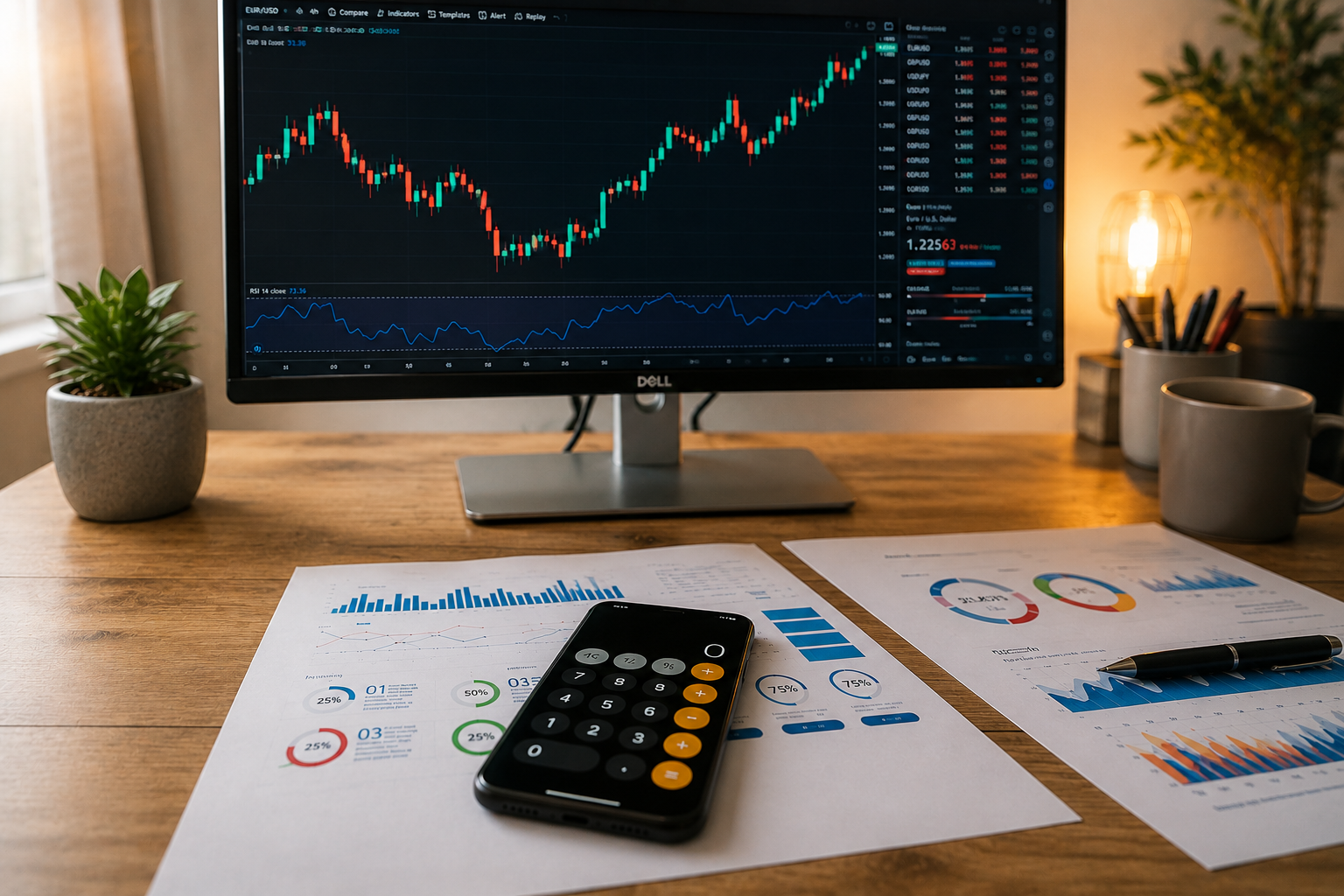
Scalping vs. Swing vs. Position Trading: Which Trading Style Is Right for You?
What Is Scalping in Forex? Understanding the Fastest Trading Style
Scalping is one of the fastest and most active trading styles in the forex market. Instead of holding trades for hours or days, scalpers open and close positions within seconds or just a few minutes. During a single trading session, they may execute dozens—or even hundreds—of trades.
The objective isn’t to capture large market moves. Instead, scalpers aim to secure a few pips from each trade and rely on a high number of successful trades to build consistent profits over time. In this strategy, volume and execution speed matter more than waiting for a single big opportunity.
Where Does a Scalper’s Trading Edge Come From?
The success of scalping comes from taking advantage of very small price movements that occur throughout the trading day. These opportunities often appear because of:
- Small price inefficiencies
- Bid-ask spread fluctuations
- Short-lived liquidity gaps
- Immediate reactions after major news releases
These market movements usually last only a few seconds, which is why speed is essential.
Most scalping trades target only 2 to 5 pips on major currency pairs. Since the profit on each trade is relatively small, a trader’s success depends heavily on maintaining a high win rate and achieving fast order execution rather than accurately predicting long-term market direction.
Best Currency Pairs for Scalping
Not every currency pair is suitable for scalping. The strategy works best in markets with high liquidity and tight spreads.
Popular choices include:
- EUR/USD
- GBP/USD
- USD/JPY
These pairs generally offer:
- Lower spreads
- Faster order execution
- High trading volume
- Better liquidity
Even a slight difference in spread—such as 0.1 pip on EUR/USD—can significantly impact profitability when executing dozens of trades each day.
On the other hand, exotic currency pairs usually have wider spreads and lower liquidity, making them less suitable for scalping because transaction costs quickly reduce potential profits.
Essential Requirements for Successful Scalping
Since scalping depends on speed and precision, traders need a strong trading setup.
Low-Latency Internet Connection
A stable and fast internet connection is critical. Many experienced scalpers use a Virtual Private Server (VPS) located close to their broker’s servers to reduce execution delays by a few milliseconds.
ECN or STP Trading Account
Using an ECN or STP account provides access to raw spreads and direct market execution. This helps reduce requotes and slippage, both of which can negatively affect short-term trading results.
Fast Trading Platform
Scalpers benefit from platforms that support:
- One-click trading
- Keyboard shortcuts (hotkeys)
- Instant order execution
Any delay while entering or exiting trades can reduce profitability.
Reliable Broker
Choose a broker that routes orders directly to liquidity providers instead of using a dealing desk. Direct execution generally offers faster fills and minimizes unnecessary order manipulation.
Regulatory and Tax Considerations for Scalpers
Some countries apply different rules to traders who execute a high number of short-term trades.
For example:
- Certain regulators may classify high-frequency traders differently, which can influence leverage or margin requirements.
- In some regions, profits from frequent trading may be treated as business income instead of capital gains, affecting tax reporting.
Because these regulations vary from country to country, always check the trading and tax rules that apply in your local jurisdiction before increasing your trading activity.
Swing Trading: Capturing Market Moves Over Days or Weeks
Swing trading offers a balanced approach between fast-paced day trading and long-term investing. Instead of holding positions for only minutes, swing traders usually keep trades open for two or three days up to several weeks.
The objective is to capture a meaningful portion of a market trend or price correction without constantly monitoring every market movement.
Rather than chasing every small price fluctuation, swing traders focus on larger market swings that develop gradually over time.
Where Does the Swing Trading Edge Come From?
Swing traders rely mainly on technical analysis and chart patterns that require time to develop.
Common trading setups include:
- Bullish and bearish flags
- Wedges
- Head-and-Shoulders patterns
- Support and resistance breakouts
- Trend continuation signals
Unlike scalpers, swing traders usually wait for a candle to close before entering a trade, allowing them to confirm the validity of the setup.
Because trades remain open longer, stop-loss levels are generally three to five times wider than those used in day trading.
However, wider stops are balanced by larger profit targets, often aiming for a reward that is two to three times greater than the initial risk.
Preferred Timeframes for Swing Trading
Swing traders avoid lower timeframes like one-minute or tick charts.
Instead, they commonly analyze:
- 1-Hour charts
- 4-Hour charts
- Daily charts
Most swing traders review the market once or twice a day, set price alerts, and only place a few trades each week.
This slower decision-making process helps reduce emotional stress and minimizes the pressure of making constant trading decisions.
Capital Management, Margin, and Overnight Costs
Swing trading requires disciplined position sizing because wider stop-loss levels naturally increase potential risk.
For example, risking a 50-pip stop-loss on a small account requires careful lot-size calculations to keep losses under control.
Many experienced swing traders follow the 1% risk rule, risking no more than one percent of their trading capital on any single trade.
Holding positions overnight also introduces swap (rollover) fees.
These charges can accumulate when trades remain open for several days, especially on high-interest currency pairs. Wednesday is particularly important because many brokers apply a triple swap charge to account for the weekend rollover.
Checking your broker’s swap rates before opening longer-term positions can help avoid unexpected costs.
Swing Trading vs. Scalping and Day Trading
Swing trading offers a middle ground between short-term and long-term trading styles.
Compared to scalping, it requires:
- Fewer trades
- Less screen time
- Lower emotional pressure
However, swing traders accept overnight and weekend risks.
Unexpected economic news or central bank announcements can cause the market to open significantly above or below a stop-loss level, resulting in larger-than-expected losses.
Despite this additional risk, many traders prefer swing trading because it provides greater flexibility and allows them to participate in larger market moves without spending the entire day in front of the charts.
If scalping feels too fast and position trading seems too slow, swing trading often provides the ideal balance between opportunity and lifestyle.
Position Trading: A Long-Term Strategy for Capturing Major Market Trends
Position trading is the longest-term approach among the three major trading styles. Instead of focusing on short-term price movements, position traders hold trades for weeks, months, or even longer, aiming to benefit from large market trends driven by economic and fundamental factors.
Rather than reacting to daily market fluctuations, position traders focus on the bigger picture. They often build their trading decisions around central bank policies, interest rate cycles, inflation data, and long-term economic outlooks.
Where Does the Position Trader’s Edge Come From?
Position traders rely on long-term market advantages that develop over time.
Interest Rate Differentials (Carry Trade)
One of the biggest advantages is the carry trade.
When a trader buys a currency with a higher interest rate while selling one with a lower interest rate, they may receive positive overnight swap payments for every day the position remains open.
This allows traders to earn from both price appreciation and interest payments.
Long-Term Trend Following
Position traders use weekly and monthly charts to identify trends that can continue for several months.
Unlike short-term trading, these trends often provide much larger profit potential while reducing the impact of daily market noise.
Fundamental Valuation
Many position traders also analyze economic fundamentals such as:
- Purchasing Power Parity (PPP)
- Real Exchange Rates
- Terms of Trade
- Inflation Trends
- Central Bank Policies
These indicators help determine whether a currency is undervalued or overvalued over the long term.
Time Commitment: Minimal Screen Time
One of the biggest benefits of position trading is the low daily time commitment.
Most traders spend their weekends reviewing:
- Economic calendars
- Market outlook
- Fundamental developments
- Long-term trend structure
During the week, checking the charts once a day is usually enough.
Unlike scalpers, position traders don’t need to react to every price fluctuation because their strategy is designed to ignore short-term market noise.
Capital Requirements and Managing Drawdowns
Position trades require much wider stop-loss levels than short-term strategies.
A stop-loss of 200 to 500 pips is completely normal.
Because of these wider stops, traders must reduce their position size to keep risk under control.
Many experienced position traders risk only 1% to 2% of their account balance on each trade.
Long-term positions are also heavily affected by overnight financing costs.
Holding a negative carry position for several months can significantly reduce profits, while positive carry positions can provide an additional source of income.
The Psychology of Position Trading
Position trading is best suited for traders with exceptional patience.
It is common for a trade to move hundreds of pips against the original entry before eventually reaching the expected target.
Successful position traders remain focused on their long-term market analysis instead of reacting emotionally to temporary losses.
The reward for this patience can be substantial, as successful trades often generate gains measured in hundreds or even thousands of pips.
Scalping vs. Day Trading vs. Swing Trading: Understanding the Time Commitment
One of the biggest mistakes new traders make is choosing a trading style based on profit potential instead of available time.
Every trading style requires a different level of daily commitment.
Understanding these differences can help you choose a strategy that fits your lifestyle.
Scalping: Maximum Screen Time Required
Scalping demands constant attention.
Traders often spend 4 to 8 hours or more watching price movements during highly active trading sessions such as the London-New York overlap.
Every second matters.
Missing just one setup because you stepped away from your desk could mean losing a trading opportunity.
For this reason, professional scalpers usually work in a distraction-free environment with multiple monitors, high-speed internet, and complete concentration.
Day Trading: Moderate Time Commitment
Day trading provides slightly more flexibility.
Most day traders remain active for 2 to 6 hours during a specific market session.
Although they don’t need to monitor every market movement all day, they still need to stay focused whenever they have open positions.
Between trades, short breaks are usually possible.
Swing Trading: Ideal for Busy Professionals
Swing trading is much easier to combine with a full-time job or business.
Most swing traders spend only 30 minutes to 2 hours per day reviewing charts, adjusting stop-losses, and monitoring active trades.
Instead of constantly watching price movements, they simply set alerts and allow the market to develop naturally.
The Scalping Trap
Many beginners believe scalping is the fastest way to make money.
In reality, it is also one of the most demanding trading styles.
Trying to scalp for only 20 or 30 minutes each day without following a complete trading session often leads to poor decision-making and emotional trading.
Scalping requires consistency, patience, and the ability to remain disciplined even during slow or losing market conditions.
If your daily schedule doesn’t allow several uninterrupted hours of trading, scalping is probably not the right choice.
Position Trading: Low Time, High Patience
Although position trading requires the least amount of daily work, it demands the greatest emotional discipline.
Traders may hold positions for several weeks while watching temporary losses develop before the market eventually moves in their favor.
This strategy is ideal for people who are comfortable ignoring short-term market fluctuations and focusing entirely on long-term opportunities.
Capital, Leverage, and Risk Management Across Different Trading Styles
Risk management changes dramatically depending on your chosen trading style.
Even if every trader follows the same 1% risk rule, the actual stop-loss size, position size, and capital requirements vary significantly.
Scalping: Small Stops, High Trading Frequency
Scalpers typically use stop-losses between 3 and 10 pips.
Although each individual loss appears small, executing dozens of trades every day means losses can quickly accumulate.
For example, several losing trades in one session can significantly reduce a small trading account if proper discipline isn’t maintained.
Typical Leverage
Scalpers often use leverage ranging from 30:1 to 50:1 because their stop-losses are very tight.
However, high leverage combined with frequent trading increases overall account risk.
Swing Trading: Wider Stops and Fewer Trades
Swing traders usually place stop-losses between 20 and 80 pips.
Since trades occur less frequently, individual losses are larger, but overall trading stress is generally lower.
Many traders consider $10,000 a practical starting balance for trading standard position sizes while maintaining sound risk management.
Typical Leverage
Swing traders commonly use leverage between 10:1 and 20:1, allowing enough room for wider stop-losses without creating unnecessary margin pressure.
Position Trading: Largest Stops and Longest Holding Periods
Position traders often use stop-losses exceeding 100 pips, and sometimes several hundred pips depending on market conditions.
Because trades remain open for months, sufficient account capital is essential.
Many professionals recommend starting with $25,000 or more if trading larger position sizes while maintaining conservative risk levels.
Typical Leverage
Position traders usually keep leverage relatively low—often 5:1 or less.
Lower leverage provides greater protection against temporary market volatility and helps avoid unnecessary margin calls during long-term trades.
Comparing Risk Across Trading Styles
The relationship between stop-loss size and required capital is straightforward.
- Scalping: Small stops, frequent trades, lower capital requirement.
- Swing Trading: Medium stop-losses, fewer trades, moderate account size.
- Position Trading: Wide stop-losses, very few trades, larger capital requirement.
Instead of selecting a trading style based solely on profit potential, choose one that matches your account balance, risk tolerance, and available trading time.
A trading strategy that fits both your finances and your personality is far more likely to produce consistent long-term results.
The Psychology of Trading: Which Trading Style Matches Your Personality?
Many traders spend countless hours comparing indicators, chart patterns, and trading strategies, but overlook one of the most important factors—their own personality.
A trading strategy can be technically perfect, yet still fail if it doesn’t match the trader’s mindset, patience level, or emotional discipline. The best trading style is not simply the one with the highest profit potential; it’s the one you can follow consistently without breaking your rules.
Let’s explore which personality traits suit each trading style.
The Scalper’s Mindset
Scalping demands quick thinking, sharp focus, and exceptional emotional control.
Because trades last only a few seconds or minutes, scalpers constantly experience rapid gains and losses. They must be able to accept small losses without hesitation and immediately move on to the next setup.
Successful scalpers don’t allow emotions from one trade to affect the next.
Another challenge is dealing with long periods of waiting. While many people believe scalping is nonstop action, experienced scalpers often spend more time waiting for the perfect opportunity than actually placing trades.
If you become impatient, easily distracted, or feel the need to trade constantly, scalping can quickly lead to overtrading and unnecessary losses.
The Swing Trader’s Mindset
Swing trading requires a completely different type of patience.
After entering a trade, the market may move sideways—or even slightly against your position—for several days before eventually moving toward your target.
Successful swing traders remain confident in their trading plan rather than reacting to every small price movement.
They also accept overnight and weekend risk as a normal part of the strategy.
If watching temporary losses makes you nervous or encourages you to close trades too early, swing trading may become emotionally challenging.
The Position Trader’s Mindset
Position traders focus almost entirely on long-term opportunities.
They understand that large market trends rarely move in a straight line. Temporary pullbacks and drawdowns are expected and accepted.
Instead of checking charts every hour, position traders trust their research and allow enough time for their market analysis to play out.
This trading style suits individuals who are naturally patient, disciplined, and comfortable waiting weeks or months for results.
Those who constantly monitor their account balance or feel the need to stay active every day often struggle with position trading.
Common Personality Mistakes Traders Make
Many traders choose a strategy based on excitement rather than compatibility.
Here are some of the most common mismatches.
Impulsive Traders Choosing Scalping
Scalping often appears exciting because of its fast pace.
However, successful scalping requires strict discipline—not impulsive decision-making.
Impulsive traders frequently:
- Enter trades without confirmation.
- Increase lot sizes after losses.
- Revenge trade to recover money.
- Ignore stop-loss rules.
These habits can quickly destroy a trading account.
Anxious Traders Choosing Swing Trading
Many traders correctly identify strong swing setups but struggle emotionally once the trade is open.
As soon as the market pulls back slightly, they panic and close the trade early.
Unfortunately, the market often continues toward the original target after they’ve exited.
In these situations, the problem isn’t poor analysis—it’s a lack of confidence and patience.
Questions Every Trader Should Ask Before Choosing a Trading Style
Before deciding between scalping, swing trading, or position trading, honestly answer the following questions:
- Can I stay committed to my trading plan even if a trade remains in loss for several days?
- How often do I check my open positions during the day?
- After losing a trade, do I immediately want to recover the money with another trade?
- Am I comfortable holding positions overnight or through major news events?
- Would I rather earn many small profits or wait for fewer but much larger gains?
Your answers will often reveal which trading style naturally suits your personality.
Choosing a strategy that matches your temperament is usually more important than choosing the one that looks most profitable.
The Best Trading Style for Beginners
Every new trader dreams of making fast profits.
Unfortunately, that mindset often leads beginners toward the most difficult trading style—scalping.
While scalping looks exciting on social media, it requires skills that beginners simply haven’t developed yet.
Why Beginners Should Avoid Scalping
Scalping demands three essential skills that take time to master.
Fast Execution
Entries and exits must happen within seconds.
Any hesitation can completely change the outcome of a trade.
Platform Familiarity
Scalpers need complete confidence using their trading platform.
They must quickly:
- Open positions.
- Modify orders.
- Close trades instantly.
- Manage multiple positions without confusion.
Emotional Discipline
Perhaps the hardest skill is accepting small losses without becoming emotional.
Many beginners lose control after only one or two losing trades and begin revenge trading, which usually creates even larger losses.
For these reasons, jumping directly into scalping often leads to unnecessary account damage.
Why Swing Trading Is the Best Choice for New Traders
Swing trading provides a much more comfortable learning environment.
Instead of making dozens of trading decisions every day, beginners usually focus on only a few quality setups each week.
This slower pace offers several important advantages:
- More time to analyze charts.
- Less emotional pressure.
- Better understanding of market structure.
- Improved risk management.
- Reduced screen time.
Because trades remain open longer, beginners can study why a trade succeeds or fails instead of reacting to every market fluctuation.
A Smart Learning Path for New Traders
Learning to trade is similar to learning any professional skill—it should happen step by step.
Trying to master advanced techniques too early usually creates frustration.
A structured learning plan looks like this:
Months 1–3
Practice swing trading on a demo account.
Focus on:
- Trend identification.
- Support and resistance.
- Risk-to-reward planning.
- Trade journaling.
Avoid live trading during this stage.
Months 4–6
Continue practicing swing trading while experimenting with one simple intraday setup each day.
The goal is to become comfortable with faster market conditions without risking real money.
Months 7–9
Begin trading small live positions using micro lots (0.01 lots).
Keep risk below 0.5% of your account balance per trade.
Focus on consistency rather than profit.
Month 10 and Beyond
Once you have developed discipline, consistency, and confidence, you can gradually introduce controlled scalping sessions.
Limit these sessions to around 30 minutes and always trade with a strict stop-loss and predefined risk management plan.
Don’t Fall for the Scalping Myth
One of the biggest misconceptions in trading is believing that faster trading means easier profits.
In reality, scalping is one of the most demanding trading styles.
Professional scalpers spend years developing:
- Lightning-fast execution.
- Emotional discipline.
- Risk management skills.
- Consistent decision-making.
Beginners who chase quick profits often lose their first trading account because they underestimate the level of experience required.
Instead of focusing on speed, focus on building strong trading habits.
Master one strategy, develop consistency, and allow your skills to grow over time.
In trading, long-term success comes from discipline—not from chasing fast money.
How to Test a Trading Style Without Risking Real Money
Choosing the right trading style shouldn’t be based on guesswork or a handful of demo trades. The safest way to discover whether scalping, swing trading, or position trading suits you is to test each approach in a structured and disciplined way before investing real money.
A well-planned trial allows you to evaluate your strategy, improve your decision-making, and understand whether the trading style fits your schedule, personality, and risk tolerance.
Start With a Demo Account That Mirrors Live Trading
Before risking your own capital, open a demo account on the same trading platform you plan to use for live trading, whether it’s MT4, MT5, or another platform.
The goal is to recreate real trading conditions as closely as possible.
For example:
- If you intend to scalp EUR/USD during the London session, practice during those exact market hours.
- If your plan is to become a swing trader, review your charts only once or twice each day instead of constantly watching price movements.
Your demo trading should also include the same:
- Currency pairs
- Lot sizes
- Leverage
- Spread conditions
- Commission structure
The closer your demo environment matches live trading, the more reliable your results will be.
Collect Enough Trades Before Judging Your Results
Many traders make the mistake of changing strategies after only a few trades.
A small sample size cannot accurately measure performance.
Instead, set a minimum number of trades before evaluating your results.
Scalping
Because scalping involves frequent trading, aim for at least 200 completed trades before drawing conclusions.
Individual wins and losses mean very little in such a high-frequency strategy.
Swing Trading
Swing traders execute fewer positions, so a sample of 50 to 100 trades usually provides enough data to evaluate consistency.
Position Trading
Since position trades may remain open for weeks or months, 30 to 50 completed trades can provide meaningful long-term performance insights.
Measure More Than Just Your Win Rate
Winning a high percentage of trades doesn’t automatically mean you’re profitable.
For example, a trader may win 70% of trades but still lose money if each losing trade is significantly larger than each winning trade.
Instead of focusing only on your win rate, monitor these important performance metrics.
Profit Factor
Profit Factor compares your total profits to your total losses.
- Above 1.5 indicates healthy performance.
- Above 2.0 reflects a strong and consistent trading strategy.
Average Risk-to-Reward (R Multiple)
Measure how much reward you earn compared to the amount you risk on every trade.
Strong traders consistently earn more than they risk over a large sample of trades.
Maximum Drawdown
Maximum drawdown shows the largest decline your trading account experiences before reaching a new high.
This metric reveals how much temporary loss your strategy can generate during difficult market conditions.
Time Spent in Drawdown
Some strategies recover quickly after losses, while others may remain below previous account highs for several weeks or months.
Understanding this recovery period is important because it directly affects your confidence and emotional discipline.
Simulate Real Market Conditions
Demo accounts often provide perfect trade execution, but live markets rarely do.
To prepare for real trading, include realistic trading costs in your testing process.
These include:
- Market spreads
- Trading commissions
- Slippage
- Overnight swap charges (if applicable)
If you normally plan to trade 0.10 lots, use the same position size in your demo account.
Likewise, assume realistic slippage—especially during volatile news events—rather than expecting every order to execute at the exact requested price.
Testing under realistic conditions produces far more reliable results.
When Should You Change Your Trading Style?
Not every trading strategy will suit every trader.
If your performance remains poor even after completing the recommended number of trades, it may be time to reconsider your approach.
Some warning signs include:
- Profit Factor remains below 1.0
- Drawdowns consistently exceed your comfort level
- You struggle to follow your trading rules
- Your trading schedule conflicts with your daily routine
- Emotional stress regularly affects your decision-making
Changing your strategy is not a failure.
In many cases, it simply means you’ve discovered that another trading style is better suited to your personality, available time, or financial goals.
Final Thoughts: Which Trading Style Should You Choose?
There is no single trading style that works best for everyone.
Scalping, swing trading, and position trading each offer unique advantages, but they also require different levels of skill, patience, capital, and emotional discipline.
If you enjoy fast-paced decision-making and can dedicate several uninterrupted hours to the markets, scalping may suit you.
If you prefer a balanced approach that offers flexibility while still capturing meaningful market movements, swing trading is often the ideal choice.
For traders who focus on long-term trends and don’t mind waiting weeks or months for results, position trading can provide significant opportunities with minimal daily screen time.
Most importantly, choose a trading style that matches your lifestyle—not someone else’s success story.
Your available time, account size, emotional discipline, and personal goals should always guide your decision.
Start with a demo account, build experience step by step, follow a disciplined risk management plan, and focus on long-term consistency instead of chasing quick profits.
Successful trading isn’t about finding the “perfect” strategy.
It’s about finding the strategy you can execute with confidence, discipline, and consistency over the long run.
